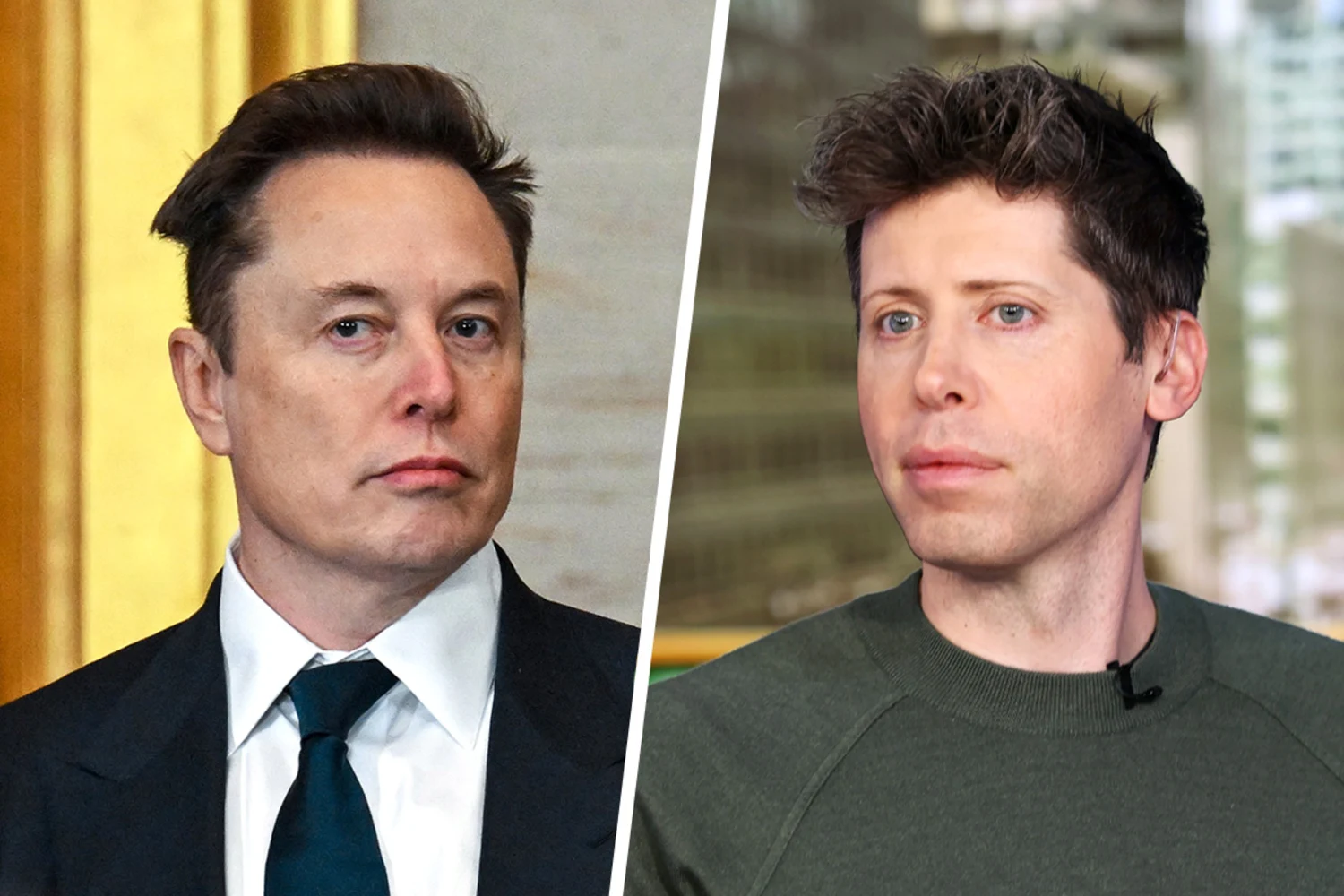

Elon Musk cannot let this go. And honestly, watching from the sidelines, you start to understand why.
The man who helped birth OpenAI as a nonprofit back in 2015 — writing checks, lending credibility, sitting on the board — now finds himself locked out of what might become the most valuable technology company of the decade. That stings. It stings in a way that $300 billion in personal wealth doesn’t quite soothe. So Musk keeps swinging, keeps filing motions, keeps posting on X with the kind of persistence that would get anyone else labeled obsessive.
His latest broadside? Sam Altman “stole a charity.” Those are fighting words. The kind of accusation that sounds hyperbolic until you actually trace the corporate genealogy of OpenAI and realize — well, it’s complicated.
The Nonprofit That Became a Money Machine
Here’s what Musk is really saying when he talks about stolen charity. OpenAI launched in 2015 as a genuine nonprofit. The mission statement read like something from a graduate ethics seminar: develop artificial general intelligence for the benefit of humanity. Not shareholders. Not venture capitalists. Humanity.
Musk contributed approximately $50 million to that vision. He wasn’t alone — other donors believed they were funding something fundamentally different from the usual Silicon Valley extraction machine.
Then came 2019. OpenAI created a “capped profit” subsidiary. The explanation was reasonable enough at the time: competing with Google and Microsoft required capital that nonprofits struggle to raise. The cap supposedly limited investor returns to 100 times their investment. Which sounds restrictive until you realize 100x on a billion-dollar bet is still $100 billion.
Microsoft poured in $13 billion. Then more. The nonprofit shell remained, technically, but the economic substance had shifted entirely. And now OpenAI is actively exploring conversion to a fully for-profit structure — a move that would complete what critics call the bait-and-switch.
Musk’s legal team argues this violates the foundational terms under which early donors contributed. You don’t give money to a charity expecting it to metamorphose into a $150 billion commercial juggernaut. That’s not how charitable donations work. Except apparently it is, if you structure things carefully enough.
What the Bettors Actually Think
So here’s where prediction markets get interesting. Because while Musk wages his legal and rhetorical war, Polymarket’s latest markets suggest the professional betting community isn’t particularly worried about OpenAI’s commercial future.
The question of whether OpenAI goes public — which Musk’s entire legal strategy might theoretically derail — remains a matter of when, not if, according to current market pricing. Bettors are assigning meaningful probability to an IPO happening within the next 24 to 36 months, despite ongoing litigation, despite regulatory uncertainty, despite the entire nonprofit conversion drama.
Why the confidence? A few reasons worth unpacking.
First, courts move slowly. Musk’s lawsuit will generate headlines for years before generating verdicts. OpenAI can convert its structure, complete financing rounds, and potentially file S-1 paperwork while motions are still being argued. Litigation doesn’t freeze corporate development — it just adds legal fees.
Second, the Microsoft relationship provides a backstop. With that much capital already committed, Microsoft has every incentive to help OpenAI navigate whatever structural changes maximize their equity position. When your biggest investor is also one of the world’s most sophisticated financial operators, you have options that typical startups don’t.
Third — and this is cynical but accurate — charitable purpose claims rarely succeed in blocking commercial restructuring when the economic stakes are this high. The legal system generally accommodates capital formation. It’s good at that. Consumer protection and donor rights tend to fare less well.
The Musk Factor: Genuine Grievance or Strategic Warfare?
There’s a version of this story where Musk is simply right. Where he recognized a genuine betrayal of nonprofit principles and is using his substantial resources to hold powerful people accountable. That version isn’t implausible.
But there’s another version. One where xAI — Musk’s own artificial intelligence venture — benefits enormously from any chaos at OpenAI. Where regulatory scrutiny of OpenAI’s corporate structure creates competitive breathing room for Grok and whatever comes next. Where the lawsuits function less as justice-seeking and more as market-shaping.
Both things can be true simultaneously. Musk can have legitimate complaints about OpenAI’s evolution AND pursue those complaints partly because doing so advantages his commercial interests. The world contains multitudes. So do billionaire motivations.
What’s notable is how prediction markets price this ambiguity. They don’t seem to care much about Musk’s intentions. They care about outcomes. And the outcome they’re betting on is OpenAI continuing its trajectory toward becoming a dominant, publicly traded AI company — regardless of origin story controversies.
The Deeper Question Markets Can’t Answer
Kalshi’s regulatory fight has shown us that prediction markets excel at probability estimation but struggle with normative questions. They can tell you what’s likely. They can’t tell you what should happen.
Should OpenAI be allowed to convert from nonprofit to for-profit? Should donors who contributed under one set of assumptions have legal recourse when those assumptions evaporate? Is there something fundamentally wrong with building a $150 billion company on the chassis of a charitable organization?
These aren’t questions with market-tradeable answers. But they matter. They matter for how we structure future AI development, for how we think about philanthropic contributions to technology research, for whether mission-driven organizations can ever compete with pure profit maximizers.
Musk, whatever his motivations, is forcing those questions into public view. The lawsuit creates a documentary record. The rhetoric generates media coverage. Even if he loses — especially if he loses — the process illuminates something about how power actually operates in contemporary technology capitalism.
Markets are pricing in business as usual. But business as usual is precisely what’s being contested.
Where This Goes From Here
OpenAI will likely complete its corporate restructuring. The nonprofit entity may receive some compensation — a token acknowledgment of its historical role — but economic control will shift definitively to commercial investors. An IPO in 2026 or 2027 seems plausible if market conditions cooperate.
Musk will keep fighting. The legal case will grind through motions and depositions and appeals. He’ll post about it. He’ll probably post about it a lot. Some of what he says will be accurate. Some will be strategic exaggeration. The line between those categories will remain difficult to locate.
And prediction markets will keep updating. Every court ruling, every financing announcement, every regulatory statement gets incorporated into the probability estimates. The bettors adjust their positions. Money flows toward whoever is reading the situation most accurately.
That’s the beautiful, brutal efficiency of these markets. They don’t moralize. They don’t pick sides in billionaire feuds. They just ask: what happens next? And right now, despite everything, they think OpenAI still wins.
Whether that’s the right outcome is a question the market can’t answer. But it’s the outcome the money expects.