

A Market That Actually Means Something
Here’s what happens when prediction markets mature past their novelty phase: they start telling you things the conventional wisdom hasn’t caught up with yet. And right now, on Kalshi’s 2026 FIFA World Cup Championship market, the money is moving toward Brazil in a way that deserves more attention than it’s getting.
The Seleção — five-time world champions, absent from the final four since their heartbreaking semifinal exit against Germany in 2014 — are trending upward in a market where every percentage point represents actual capital at risk. This isn’t sentiment. This isn’t punditry. This is people putting money where their opinions are, and the aggregate judgment is that Brazil’s rebuild under Dorival Júnior has legs.
What makes this particularly interesting is the context. We’re watching prediction markets expand into sports betting territory in ways that would have seemed legally impossible two years ago. Kalshi fought a brutal regulatory battle to offer these contracts — and won. Now they’re providing price discovery on events that traditional sportsbooks have been covering for decades, but with a transparency those books never offered.
The Brazil move isn’t happening in isolation. It’s part of a broader repricing of tournament favorites that’s been unfolding since qualifying began in earnest. Argentina remains the implied favorite — they’re defending champions, after all, with Lionel Messi potentially making his final World Cup run on American soil. France sits in the top tier as perennial contenders. But Brazil’s probability has been climbing steadily, suggesting the market sees something the casual observer might miss.
The Rebuild That’s Actually Working
Dorival Júnior took over the national team in January 2024 after a chaotic stretch that saw Brazil cycle through multiple coaches. The early returns were mixed — a disappointing Copa América quarterfinal exit raised questions. But since then, the team has found its footing.
The generation transition that plagued Brazil for years is finally complete. Vinícius Júnior has evolved from prodigy to genuine superstar at Real Madrid. Rodrygo provides a complementary attacking threat. Endrick, still a teenager, offers the kind of raw potential that makes tournament runs possible. And behind them, Éder Militão and Marquinhos anchor a defense that’s learned from past tournament collapses.
Prediction markets are particularly good at aggregating this kind of dispersed information. Someone watching every Brazil qualifier, someone tracking Vinícius’s form for Real Madrid, someone who knows the coaching dynamics inside out — their collective knowledge gets priced into these contracts in a way that single-source analysis can never replicate. Wall Street’s sharpest traders have figured this out, which is part of why institutional interest in these markets keeps growing.
The 2026 tournament format changes matter too. Forty-eight teams instead of thirty-two. More matches. More variance. More opportunity for deep squads to grind their way through bracket chaos. Brazil has historically struggled in knockout stage pressure cookers — see: 2014, 2018, 2022 — but an expanded format with an extra round might actually favor their depth over their mental fragility.
Home Hemisphere Advantage
Something the market may be pricing that analysts haven’t fully articulated: the 2026 World Cup is being hosted across the United States, Canada, and Mexico. For South American teams, that’s dramatically different than traveling to Qatar or Russia. Time zones favor Latin America. Travel distances shrink. Fan presence becomes viable in a way it simply isn’t for tournaments held in Asia or Europe.
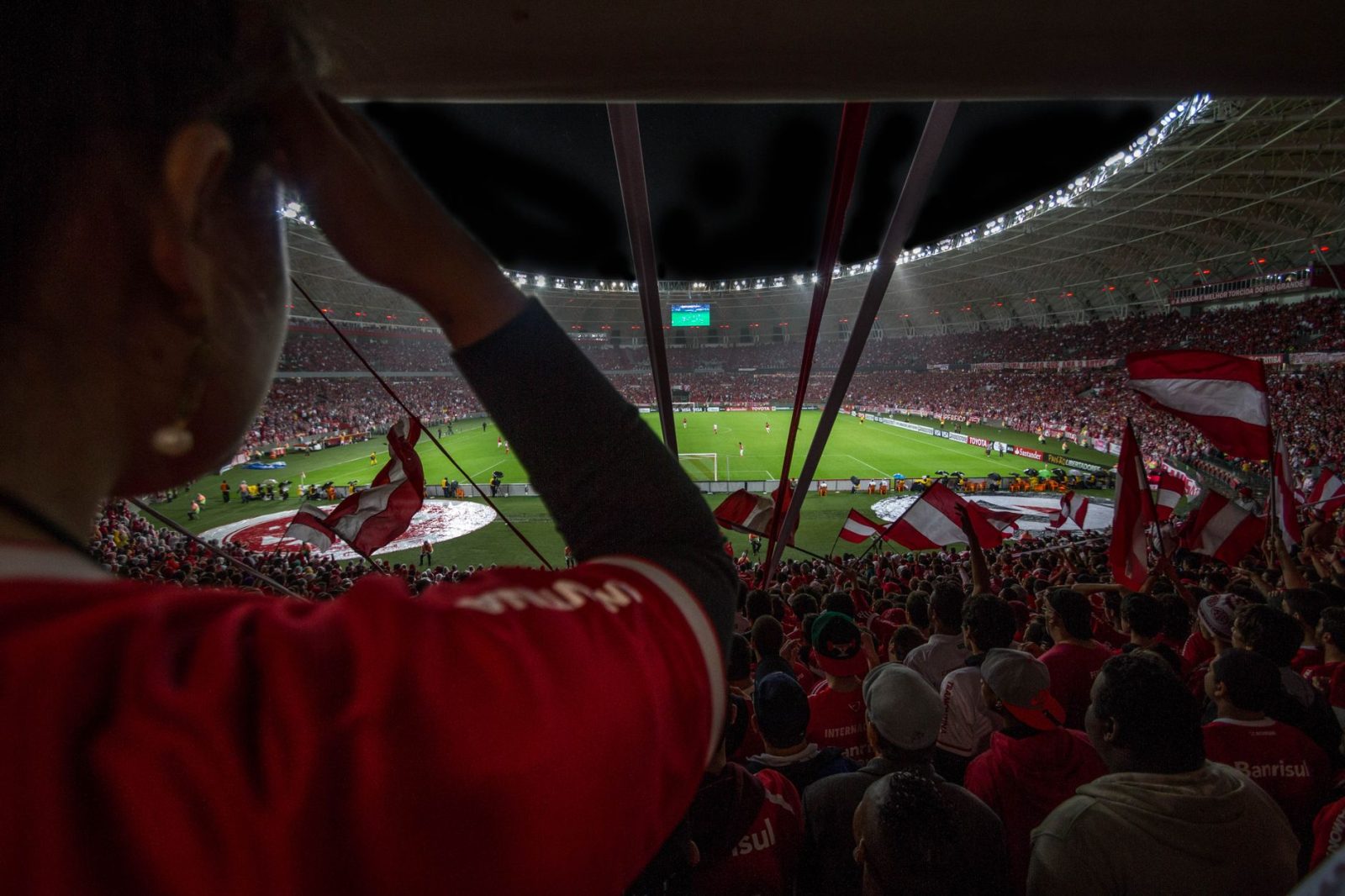
Brazil’s supporters are legendary, and they’ll be able to actually show up in Dallas, Los Angeles, and Miami in numbers that rival Argentina’s. Atmospheric advantage matters in tournament football — anyone who watched the 2022 World Cup knows how Argentina’s wall of fans affected opponents’ concentration in crucial moments.
The regulatory environment that made these markets possible is worth understanding here. Kalshi didn’t stumble into sports contracts — they litigated for years to establish that event contracts don’t constitute illegal gambling under federal law. Their victory opened doors for exactly these kinds of markets: long-term, high-profile events where price discovery adds genuine informational value.
Compare this to how traditional bookmakers operate. Vegas lines move based on where the money flows, but the opacity is intentional. Kalshi’s order books are visible. You can see who’s bidding at what prices, watch the market depth in real time. That transparency attracts a different kind of participant — the kind who believes they have genuine information rather than just rooting interest.
What the Skeptics Miss
The bear case on Brazil is obvious and has been for a decade: they choke under pressure. The 7-1 defeat to Germany in their home World Cup semi-final left psychological scars that haven’t fully healed. They were favorites or near-favorites in 2018 and 2022 and didn’t make the final four in either tournament. Why would 2026 be different?
The market’s answer, embedded in the rising prices, seems to be: generational turnover. The players who carried that trauma — Neymar, Thiago Silva, Marcelo, David Luiz — are mostly gone or will be ancillary figures if present at all. Vinícius was 13 years old when the Mineirazo happened. The mental baggage simply doesn’t transfer.
There’s also something quietly reshaping how these markets function: institutional capital finding its way into prediction markets. When the NYSE’s parent company backs Polymarket at a $15 billion valuation, when hedge fund strategies incorporate prediction market signals, the participants change. You get more sophisticated analysis, faster price adjustment to new information, tighter spreads.
That doesn’t mean the market is always right. But it means the prices deserve serious consideration in a way that fan polls or pundit rankings simply don’t.
The Longer Game
The Brazil trend on Kalshi’s World Cup market is one data point in a much larger story about how prediction markets are becoming central to sports analysis and financial speculation alike. A year ago, these contracts barely existed. Now they’re generating volume that rivals some traditional derivatives.
The skeptics — and there are many, particularly among state regulators who view these platforms with suspicion — argue that sports prediction markets are just gambling with better marketing. And sure, for the casual participant, the distinction might be academic. But for price discovery purposes, for understanding how informed money views uncertain events, the mechanism matters.
Right now, that mechanism is saying Brazil deserves serious consideration for 2026. Not as the heavy favorite — Argentina still holds that position — but as a value proposition that’s been underpriced relative to their actual tournament ceiling. The Seleção are trending up because the people willing to put capital behind their analysis think the rebuild is real, the talent is generational, and the home-continent advantage is underweighted.
Whether they’re right won’t be known until matches are actually played in June 2026. But that’s the beauty of prediction markets — the positions are public, the reasoning gets tested, and everyone with conviction has a chance to prove it. Brazil’s upward movement on Kalshi isn’t a prediction. It’s an argument, denominated in dollars, about what happens next.