

The crypto presale machine never sleeps. It just changes costumes.
This week’s headline belongs to Pepeto, a frog-themed meme coin that has reportedly crossed $10.3 million in presale funding. Meanwhile, XRP price predictions are floating targets as high as $12.50 — a number that sounds less like analysis and more like aspiration dressed in technical indicators. Both stories tell us something about where crypto speculation is headed, and neither story tells us quite what its promoters want us to believe.
The Presale Industrial Complex Adds Another Amphibian
Pepeto joins a crowded pond. The meme coin presale model has become so formulaic that you could practically generate the marketing copy with a template: animal mascot, community-driven narrative, multi-stage presale with escalating prices, roadmap featuring exchange listings and utility promises that remain conveniently vague.
The $10.3 million figure is real money. Whether it represents genuine market conviction or simply the momentum of a well-oiled promotional apparatus is the question nobody running these presales wants you to ask too loudly.
Here’s what we know about presale economics: early participants get tokens at discounted prices. The presale structure creates artificial scarcity and urgency. Marketing materials emphasize the gap between presale prices and projected post-listing valuations. And the vast majority of meme coin presales — the overwhelming, statistically brutal majority — result in losses for anyone who didn’t get in during the earliest phases and get out before the music stops.
That’s not FUD. That’s the documented history of this asset class.
The Pepeto presale is structured across multiple stages, with price increases at each phase designed to reward early commitment and create FOMO among later arrivals. This structure is standard across the industry, as we’ve covered in our ongoing look at emerging market dynamics. What makes it noteworthy isn’t innovation — it’s scale. Ten million dollars is a lot of capital flowing into a project whose primary value proposition appears to be its mascot.
XRP’s $12.50 Fantasy and the Prediction Market Silence
The XRP price prediction of $12.50 deserves scrutiny that it rarely receives in the promotional content ecosystem.
At the time of writing, XRP trades around $2.20. A move to $12.50 would represent approximately a 470% gain — the kind of return that would make early Amazon investors nod approvingly. The case for such a move typically rests on a combination of technical analysis patterns, anticipated regulatory clarity following Ripple’s ongoing legal saga, and broader crypto market momentum.
But here’s what’s interesting: prediction markets, which have become increasingly sophisticated at pricing crypto outcomes, show remarkably little enthusiasm for extreme XRP price targets. When crypto speculation heats up, prediction markets tend to reflect that enthusiasm with concrete probabilities attached to specific price levels. The absence of robust prediction market action around $12.50 XRP targets tells you something about where the smart money actually sits.
This gap — between promotional price targets and actual market-priced probabilities — is one of the most useful signals in crypto. When someone tells you a token is going to 5x and prediction markets price that outcome at 8%, you’re not looking at hidden alpha. You’re looking at marketing.
The Information Void Where Analysis Should Live
The original reporting on both the Pepeto presale and the XRP price prediction suffers from a problem endemic to crypto coverage: it presents promotional claims without contextualizing them against verifiable market data.
A $10.3 million presale is presented as evidence of momentum. But momentum toward what? What’s the token’s intended utility? Who are the developers? What’s the vesting schedule for presale tokens? What happens to liquidity after launch? These questions aren’t academic — they’re the difference between investment and speculation, between calculated risk and lottery ticket.
Similarly, XRP price predictions that reach for $12.50 are presented as technical analysis without acknowledging the base rates of such predictions. How often do extreme bullish price targets in crypto actually materialize? The answer — rarely, and usually accompanied by broader market conditions that are themselves unpredictable — doesn’t make for compelling content. But it makes for honest analysis.
The prediction market industry has an opportunity here that it hasn’t fully seized. Wall Street’s interest in event contracts has grown substantially, but crypto-specific prediction markets remain dominated by short-term trading instruments rather than longer-duration bets on fundamental outcomes. A functioning prediction market on “XRP above $12 by 2026” would provide vastly more useful information than any number of technical analysis threads.
What the Meme Coin Economy Actually Tells Us
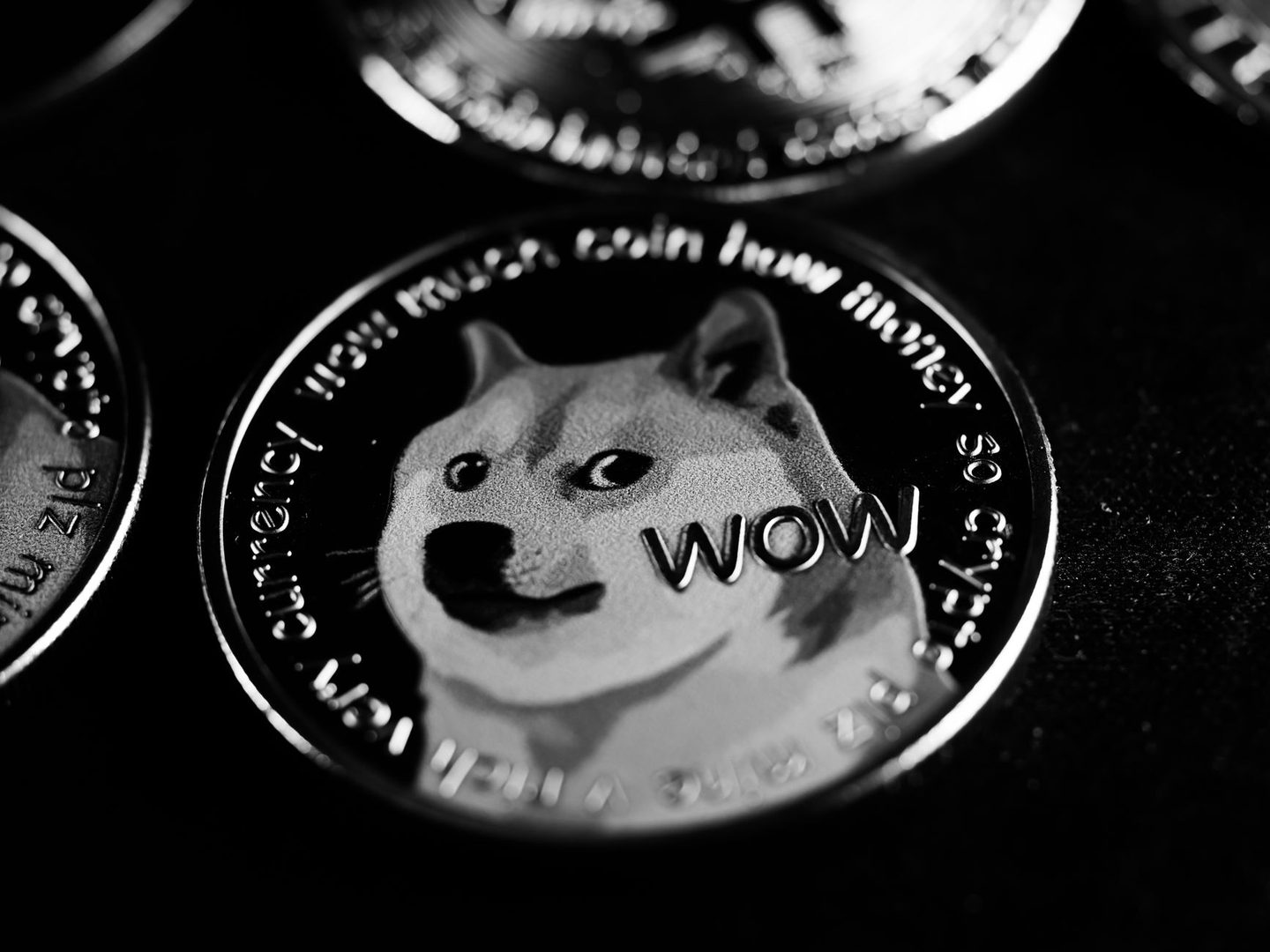
The Pepeto presale’s success — if $10.3 million can be called success before any product actually launches — reflects something real about retail crypto appetite. People want to believe in the next Dogecoin, the next Shiba Inu, the next exponential return from a joke that becomes a movement.
That desire isn’t irrational. Early Dogecoin holders did capture life-changing returns. The problem is survivorship bias at scale. For every meme coin that makes it, hundreds collapse into illiquidity. The promotional infrastructure around presales is designed to make every project look like the exception. The psychological dynamics at play are well-documented, even if they’re rarely discussed in the materials designed to attract presale capital.
Pepeto’s frog-themed branding positions it within the Pepe ecosystem that has generated genuine market interest. That’s strategic positioning, not coincidence. The question is whether strategic positioning translates to lasting value or simply front-loads demand into the presale phase.
For prediction market observers, the meme coin phenomenon raises interesting questions about how to structure markets around assets with limited fundamental anchors. Traditional equity prediction markets can reference earnings, revenue, and regulatory filings. Crypto prediction markets operating on meme coins have to grapple with price action driven almost entirely by sentiment, social media momentum, and exchange listing dynamics.
The Uncomfortable Math Nobody Mentions
Let’s do the arithmetic that crypto promotional content consistently avoids.
If Pepeto’s presale raises $10.3 million and the token launches with a fully diluted valuation of, say, $100 million — a common ratio for meme coin launches — then presale participants own roughly 10% of the supply at a substantial discount to launch price. For those participants to realize gains, the token needs to maintain sufficient liquidity and trading volume to absorb selling pressure.
The standard pattern: presale participants take profits at launch, creating immediate selling pressure. If retail demand absorbs that pressure, the token finds a floor. If demand is insufficient, prices crater and presale participants who waited too long to exit find themselves underwater despite buying at “discount” prices.
This isn’t cynical. It’s mechanical. Market dynamics don’t care about narratives — they care about order flow.
XRP’s path to $12.50 faces different but equally challenging mathematics. At $12.50 per token, XRP’s market capitalization would exceed $700 billion based on current circulating supply. That would make it the second-largest cryptocurrency, surpassing Ethereum. It’s possible. But “possible” and “probable” are different concepts, and the promotional ecosystem consistently conflates them.
Where Prediction Markets Could Add Clarity
The crypto information ecosystem desperately needs better probability-weighted forecasting. Right now, participants choose between promotional content that promises moon missions and skeptical content that dismisses everything as scams. Neither serves people trying to make informed decisions with actual capital.
Prediction markets — properly structured, adequately liquid, transparently resolved — could provide the middle ground. Instead of asking “will XRP hit $12.50?” as a yes/no proposition, sophisticated prediction markets could price probability distributions across multiple price targets and timeframes. The infrastructure is developing, even if it hasn’t yet captured the crypto-specific use cases that would make it most valuable.
For now, we’re left with presale announcements that celebrate capital raised without contextualizing risks, and price predictions that sound compelling until you examine their track record. The $10.3 million flowing into Pepeto is real. The $12.50 XRP target might even prove prescient. But in both cases, the claims being made are testable — and the crypto industry would benefit enormously from mechanisms that actually test them.
That’s the promise prediction markets have always held. Whether they’ll deliver on it for crypto remains, appropriately, an open question.
Data Visualisation
XRP Price: Current vs. Predicted Target
XRP’s $12.50 price target represents a 470% gain from current $2.20 price.