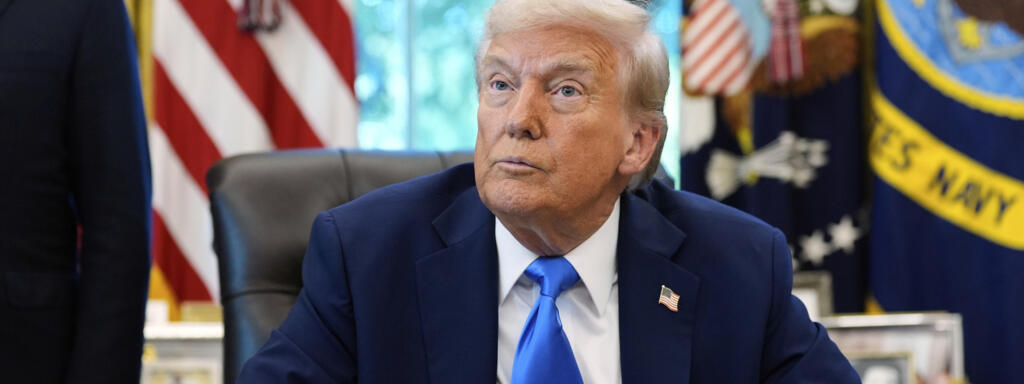

The president of the United States just called state-level officials “scum” for trying to regulate prediction markets. That happened. And if you’ve been tracking the increasingly chaotic collision between Silicon Valley money, federal deregulation, and state-level gambling enforcement, you understand why this was probably inevitable.
The Word Choice Nobody Can Ignore
Donald Trump has never been subtle. But even by his standards, labeling state regulators attempting to oversee prediction market platforms as “scum” marks a rhetorical escalation that reveals just how politically charged this industry has become. This isn’t a policy disagreement anymore. This is warfare.
The context matters. Several states have moved aggressively to assert jurisdiction over prediction markets — treating them not as innovative financial instruments but as gambling operations that skirt existing licensing requirements. The state-by-state crackdown has officially begun, and the platforms are fighting back with every tool available. Apparently, that now includes having the sitting president personally attack state enforcement officials.
For prediction market companies like Kalshi and Polymarket, this kind of executive branch cover represents something money can’t easily buy. Or rather — it represents what a great deal of money spent on Washington access ultimately purchases. The lobbying war for prediction markets has gone mainstream, and this is what winning looks like. Ugly, perhaps. But effective.
Prediction Market Washington Lobbying Increase
Prediction markets increased Washington lobbying spending by 60% this year compared to the previous period.
The Regulatory Landscape That Provoked This
To understand Trump’s outburst, you need to understand what states are actually doing. And it’s not nothing.
Multiple state attorneys general and gaming commissions have opened investigations or taken direct action against prediction market platforms operating in their jurisdictions. The argument is straightforward: if you’re letting residents bet on election outcomes, sporting events, or economic indicators — and you’re not licensed as a gambling operation — you’re breaking state law. The fact that the CFTC has granted some federal approvals doesn’t preempt state gambling statutes. That’s the legal position, anyway.
Massachusetts regulators have been saying what Wall Street won’t — that these platforms look an awful lot like casinos dressed up in fintech language. And they’re not wrong to notice the resemblance. When retail users can deposit funds, place bets on binary outcomes, and potentially lose their entire stake, the distinction between “derivatives exchange” and “online sportsbook” becomes more philosophical than practical.
Meanwhile, Ohio has moved to criminalize what prediction markets made legal at the federal level. That’s the jurisdictional knot nobody has untangled. Federal regulators say yes. State regulators say no. And the platforms operate in the gap, hoping the federal position holds while state enforcement catches up.
Why Trump Cares — And Who Benefits
Here’s where it gets interesting. Why would a sitting president personally involve himself in what is, ultimately, a regulatory turf dispute about financial products most Americans have never used?
The cynical answer involves money. Prediction markets have poured 60% more into Washington lobbying this year, and that spending has concentrated heavily among Republican-aligned firms and consultants. The platforms have built relationships. They’ve made themselves useful. And when you’ve made yourself useful to this particular White House, you get defended in public.
But there’s an ideological dimension too. Trump has consistently framed his administration as pro-deregulation, pro-innovation, anti-bureaucracy. State gambling commissions represent exactly the kind of entrenched regulatory apparatus his base loves to hate. Calling them “scum” isn’t just defending corporate allies — it’s performing a specific kind of anti-establishment politics that resonates with his coalition.
The prediction market industry understands this perfectly. Kalshi’s K Street play involved former Trump advisors for precisely this reason. When you’re fighting state-level regulators, having the president tweet in your defense is worth more than any legal brief.
The Markets Watch Themselves Get Politicized
There’s a particular irony here that prediction market enthusiasts should appreciate. The entire premise of these platforms is that markets aggregate information better than pundits, polls, or partisan spin. The wisdom of crowds, distilled into prices. But what happens when the markets themselves become the subject of partisan combat?
Polymarket’s latest markets on political outcomes now exist in a world where the president of the United States has personally intervened in the regulatory fight over whether those markets should exist. Does that information get priced in? How would you even model it?
The platforms have become actors in the very political dramas they’re supposed to neutrally forecast. When a single Truth Social post can erase 54 points of confidence in a geopolitical outcome, we’ve already entered strange territory. But this is stranger. The president isn’t just moving markets with policy announcements — he’s actively defending the infrastructure that hosts the markets from regulatory attack.
What Happens Next
The immediate question is whether Trump’s rhetoric translates into federal action. The CFTC under this administration has been notably friendly to prediction market expansion. Wall Street’s prediction market dreams involve even more permissive federal frameworks, and there’s no indication the current leadership disagrees.
But federal agencies can’t simply override state gambling laws. The Constitution doesn’t work that way. States retain police powers over gambling within their borders, and no amount of presidential name-calling changes that jurisdictional reality. What it does change is the political calculus for state officials. Do you really want to be called “scum” by the president for enforcing what you genuinely believe is existing law?
Some will back down. Others will dig in harder. The fight over prediction markets is already derailing state legislation in multiple jurisdictions, and Trump’s intervention will only intensify those battles.
For the industry itself, this moment represents both triumph and risk. Having presidential backing is valuable — until it isn’t. Administrations change. Political winds shift. And being identified as “Trump’s betting platforms” could create problems with future regulators that no amount of lobbying can solve.
The Washington scrutiny isn’t going away, regardless of who’s in the White House. Kalshi’s regulatory fight continues on multiple fronts simultaneously. And state attorneys general aren’t known for backing down when publicly insulted.
What we’re watching is the prediction market industry’s transition from regulatory novelty to genuine political flashpoint. The question was never whether these platforms would face serious opposition. The question was what form it would take, and how the platforms would respond. Now we know. They’ve chosen sides. And the president has chosen theirs.
Whether that bet pays off depends on outcomes nobody can predict — not even the markets themselves.