
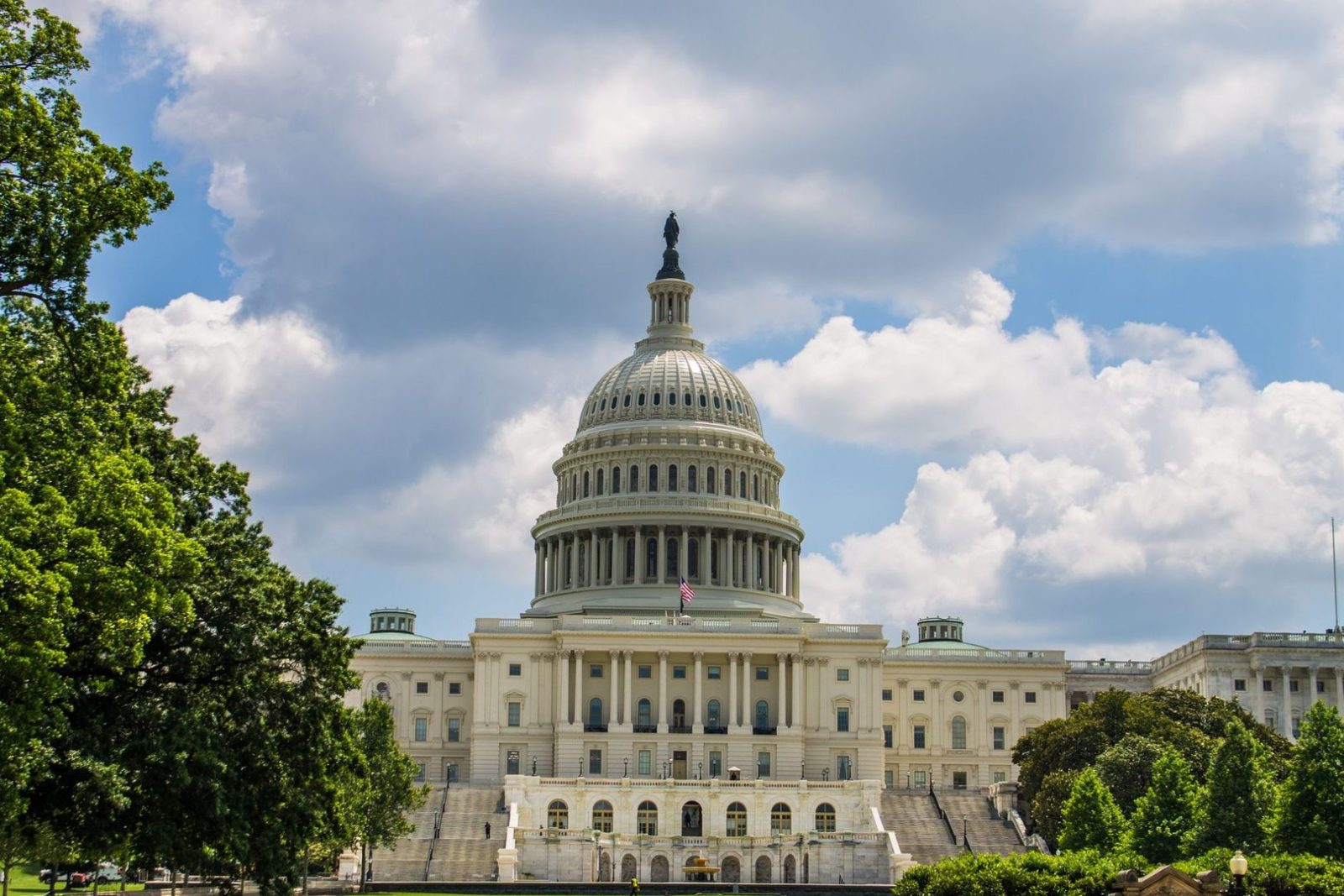

The House of Representatives just took a significant step toward restricting who can participate in prediction markets, and the implications ripple far beyond Capitol Hill. A bill advancing through committee would prohibit members of Congress, their immediate family members, and certain government officials from placing bets on political event contracts — the kind of markets that have exploded in popularity over the past two years.
On its face, this seems like common sense. Of course legislators shouldn’t profit from wagering on outcomes they can directly influence. But the details of how such restrictions get implemented, and who exactly gets caught in the net, reveal the messy reality of regulating an industry that didn’t exist at meaningful scale five years ago.
The Conflict of Interest Nobody Needed Explained
The logic is straightforward enough that it barely requires explanation. A senator sitting on the Armed Services Committee probably shouldn’t be allowed to bet on whether military action occurs in a region where they’re receiving classified briefings. A member of the House Financial Services Committee wagering on Federal Reserve interest rate decisions creates obvious problems. Even the appearance of impropriety here would be devastating to whatever credibility prediction markets have worked so hard to build.
This concern isn’t theoretical. The coming ban on government insiders betting on their own decisions has been anticipated by industry observers for months. The question was never whether restrictions would come, but how broad they would be.
And that’s where things get interesting. The bill extends prohibitions beyond elected officials to include immediate family members — spouses, children, presumably any relative close enough to receive a casual tip over Thanksgiving dinner. This mirrors insider trading rules in securities markets, where the concept of “tippee” liability has been litigated for decades. The parallel isn’t accidental. Legislators are treating prediction markets as financial instruments that require the same ethical guardrails.
Why Prediction Market Platforms Should Actually Welcome This
Here’s a counterintuitive take: platforms like Kalshi and Polymarket should be cheering this legislation, even if quietly. The industry’s biggest existential threat isn’t regulation — it’s scandal. One well-publicized case of a congressional staffer making a killing on a vote they knew was coming, and the entire sector faces the kind of backlash that could kill it.
Consider Kalshi’s $40 billion bet on itself. That valuation depends entirely on prediction markets achieving mainstream legitimacy. Legitimacy requires trust. Trust requires demonstrable fairness. And fairness requires that the people who control outcomes can’t profit from that control.
The sports betting industry learned this lesson the hard way. Every time a referee or player gets caught manipulating outcomes, the entire ecosystem suffers. Prediction markets face an even more complex version of this problem because political outcomes involve thousands of potential bad actors with varying degrees of influence. A congressional aide isn’t the same as a senator, but they might have access to the same information.
The Implementation Nightmare Nobody’s Talking About
Enforcement is where well-intentioned legislation often crashes into reality. How exactly do you verify that a member of Congress’s adult child isn’t betting through an offshore platform or a crypto-based exchange that doesn’t require identity verification? The same KYC (know your customer) requirements that make Kalshi legally compliant in the United States don’t apply to Polymarket’s latest markets, which operate in a regulatory gray zone that explicitly excludes American users but can’t actually prevent them from participating.
This jurisdictional arbitrage problem isn’t new. We’ve seen it play out across our politics coverage for months now. Domestic platforms face increasingly stringent rules while offshore alternatives absorb the demand that gets squeezed out. The result: more activity moves to less regulated venues where manipulation is arguably easier, not harder.
The bill’s sponsors seem aware of this tension. But awareness and solution are different things. When the House starts asking questions about your bets, the party’s almost over — but only if investigators can actually see the bets. Cryptocurrency wallets don’t come with congressional affiliation tags.
The Family Member Problem Gets Weird Fast
Defining “immediate family” sounds simple until you actually try to do it. Does it include a congressman’s 25-year-old child who lives across the country and has a completely independent financial life? What about an estranged spouse in the middle of divorce proceedings? A stepchild from a second marriage who the legislator has met twice?
Securities law has wrestled with these questions for decades and still hasn’t fully resolved them. The concept of “beneficial ownership” attempts to capture situations where the legal owner of an account isn’t the actual beneficiary of trades. But these rules evolved over years of SEC enforcement actions and court decisions that carved out the boundaries case by case.
Prediction markets don’t have that body of precedent. The SEC’s shadow over prediction markets keeps getting longer, but the agency has shown limited appetite for taking the lead on enforcement. The CFTC has primary jurisdiction over event contracts, and their bandwidth is already stretched thin by Kalshi’s regulatory fight and the broader struggle to define what prediction markets actually are under existing law.
What This Means for Market Integrity Claims
The prediction market industry has staked its reputation on the claim that markets aggregate information better than polls, pundits, or experts. But that claim depends on markets being truly competitive — populated by participants with diverse information and perspectives.
Banning insiders changes the composition of market participants in subtle but potentially significant ways. On one hand, you eliminate the risk of informed manipulation. On the other, you lose the signal that comes from people who actually know things. A market where legislative aides can’t participate is necessarily less informed about legislative outcomes than one where they can.
This tradeoff shows up in corporate prediction markets too. Companies that have experimented with internal prediction markets for forecasting often struggle with the insider problem. If the CEO knows the earnings guidance before anyone else, should they be allowed to bet on where the stock price lands after the announcement? Obviously not. But what about a mid-level product manager who has early data on whether the quarter will beat expectations?
The principle is easier to articulate than the line is to draw. Congress has chosen to draw it broadly — perhaps too broadly for genuine market efficiency, perhaps appropriately given the reputational stakes.
The Precedent Being Set Extends Beyond Washington
Watch what happens in the states after this federal bill moves forward. The state-by-state prediction market crackdown has officially begun, and state legislators will almost certainly face parallel restrictions once the federal template exists. Minnesota won’t be the last state to consider who should be excluded from participation.
The ripple effects extend to regulatory bodies too. Should CFTC commissioners be allowed to bet on whether their own agency approves new market types? Should Fed staffers be permitted to trade interest rate contracts? The logic of the congressional restriction applies with equal force to any government official whose decisions affect market-relevant outcomes.
We’re watching the construction of an entire ethics regime in real time. The early decisions will shape what’s possible for years to come. Prediction markets either become normalized financial instruments with appropriate guardrails, or they become gambling products that sophisticated participants avoid because the games are rigged.
The House just voted for door number one. Whether the execution matches the intention remains very much an open question.