
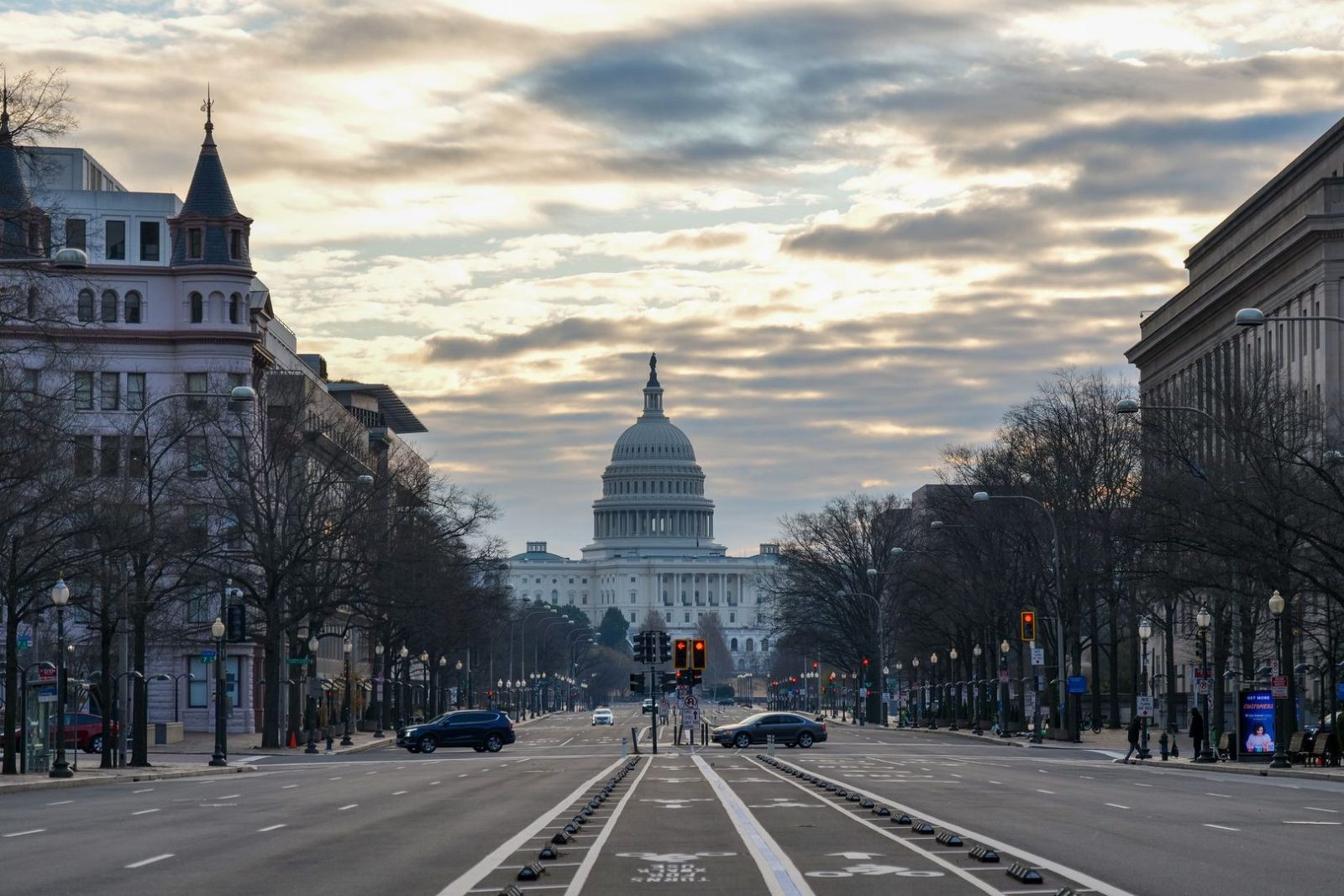

The legislative process in Washington has a way of producing proposals that sound obvious in principle and impossible in practice. A new bipartisan bill targeting congressional prediction market participation falls squarely into that familiar territory — the kind of legislation that makes headlines precisely because it highlights a problem most Americans didn’t realize existed until someone tried to fix it.
The Problem Nobody Thought to Legislate Until Now
Here’s the uncomfortable reality that a handful of lawmakers have finally decided to confront: members of Congress can, at this moment, place bets on political outcomes they might directly influence. Not hypothetically. Actually. The explosion of regulated prediction markets in the United States — platforms like Kalshi and the increasingly accessible Polymarket’s latest markets — has created a situation where a sitting senator could theoretically wager money on whether a piece of legislation passes. Their own legislation.
The bill in question aims to prohibit federal lawmakers and their staff from participating in prediction markets where political outcomes are the underlying asset. It’s the sort of prophylactic measure that feels both entirely necessary and surprisingly late. The prediction market industry has been fighting regulatory battles across multiple fronts for years now, and Congress is only just waking up to the fact that its own members might be the most problematic participants in the entire ecosystem.
What makes this bipartisan effort noteworthy isn’t the substance — most people would agree that elected officials shouldn’t profit from inside knowledge about governmental decisions. It’s that both parties found common ground on an issue touching prediction markets at all. The industry has become a political flashpoint where partisan instincts usually triumph over practical considerations.
The Timing Tells a Bigger Story
This legislative push didn’t emerge from a vacuum. The 2024 election cycle saw prediction markets achieve a level of mainstream visibility that previous cycles never approached. Platforms processed billions in trading volume on electoral outcomes. Major news outlets cited prediction market odds alongside traditional polling. And somewhere in that explosion of attention, someone in Washington apparently realized that the same technology enabling retail traders to bet on cabinet appointments could be exploited by the very people making those appointments.
The growth trajectory of American prediction markets has attracted serious institutional attention from Wall Street firms who see event contracts as the next frontier in derivatives trading. But that institutional legitimization cuts both ways. The more mainstream prediction markets become, the more scrutiny they invite — and the more glaring certain obvious conflicts of interest appear.
Consider the mechanics. A congressman sits on a committee deliberating major pharmaceutical legislation. That congressman also maintains an account on a CFTC-regulated prediction market offering contracts on FDA approval timelines. The congressman’s vote could materially affect the probability of various outcomes. Even if the congressman never trades on privileged information — even if they maintain perfect ethical discipline — the appearance alone corrodes public trust in ways that are genuinely difficult to repair.
This is why Kalshi’s regulatory fight has always been about more than just legal technicalities. The question of who should participate in prediction markets is inseparable from questions about market integrity itself.
What the Bill Actually Does — And What It Doesn’t
The legislative text prohibits members of Congress and their staff from betting on “political outcomes” through prediction market platforms. That phrase is doing a lot of work. Political outcomes could mean election results, legislative votes, executive actions, judicial nominations, or treaty ratifications. The definitional boundaries matter enormously because prediction markets have proven remarkably creative at structuring contracts that skirt regulatory categories.

What the bill doesn’t do is address the broader ecosystem. It says nothing about lobbyists placing bets on legislation they’re actively trying to influence. Nothing about executive branch officials wagering on regulatory decisions their agencies might make. Nothing about judicial clerks speculating on case outcomes. The congressional carve-out is significant, but it’s also conspicuously narrow.
This narrowness reflects political reality more than substantive judgment. Legislators can more easily impose restrictions on themselves than on others. A prohibition covering all federal employees would require different procedural mechanics and invite more stakeholder opposition. The bill represents what’s achievable, not what’s comprehensive.
The prediction market industry has already begun processing the implications. Some platforms may need to implement identity verification specifically designed to screen out congressional participants — a technical challenge that adds friction without adding revenue. Others may conclude that political markets attract too much regulatory heat relative to their profitability and shift resources toward sports or financial contracts where institutional interest is surging without comparable ethical complications.
The Enforcement Question Nobody Wants to Answer
Assume the bill passes. How, exactly, does anyone enforce it?
Prediction markets — particularly those operating on blockchain infrastructure — do not always require rigorous identity verification. A determined congressman could plausibly create an account through a family member, a trust, or a foreign entity. Proving that a specific trade originated from a prohibited participant requires investigative resources that congressional ethics offices notoriously lack.
The enforcement problem isn’t unique to this legislation. Existing congressional trading restrictions face similar challenges. Members of Congress are already prohibited from trading on material nonpublic information, yet enforcement actions remain exceedingly rare. The opacity of financial markets, the burden of proof required for ethics violations, and the political disincentives against pursuing colleagues all conspire to make rules function more as norms than binding constraints.
Prediction markets add another layer of complexity. A conventional stock trade leaves paper trails through brokerage accounts, clearing houses, and regulatory filings. A prediction market trade — especially one executed through a decentralized protocol — may leave only blockchain records that require specialized forensic analysis to attribute to specific individuals.
The CFTC has been paying closer attention to prediction market participants generally, but the commission’s resources are stretched thin across a vast derivatives landscape. Adding congressional surveillance to that mandate without corresponding budget increases means something else gets deprioritized.
Why the Industry Should Be Worried Anyway
Prediction market operators might be tempted to view this legislation as a minor inconvenience — a handful of potential customers excluded from participation in exchange for political cover against more aggressive regulation. That reading underestimates the symbolic significance.
Once Congress establishes the principle that certain categories of people are too conflicted to participate in prediction markets, expanding those categories becomes considerably easier. Today it’s legislators and staff. Tomorrow it might be federal judges, agency heads, or anyone holding a security clearance. The precedent matters more than the immediate policy.
There’s also the question of legitimacy. Prediction markets derive their value from aggregating dispersed information into price signals. The canonical defense of these markets — that they outperform polls because traders have financial incentives to reveal their genuine beliefs — depends on participants trading on information, not manipulation. If the public perceives prediction markets as venues where insiders profit from privileged access, that legitimacy evaporates regardless of whether the perception matches reality.
The coming ban on government insiders betting on their own decisions represents an industry acknowledging, however reluctantly, that some restrictions are prerequisites for mainstream acceptance. The alternative — maintaining theoretical openness while inviting regulatory crackdowns — looks considerably worse.
The Bipartisan Moment That Might Not Last
Bipartisanship in Washington tends to be either performative or fleeting. This bill might be both. The prediction market industry has become sufficiently controversial that legislators from both parties can score points by appearing tough on potential conflicts of interest. But that alignment depends on the industry remaining a relatively niche concern.
If prediction markets continue expanding — if they become as ubiquitous as sports betting apps, as integrated into financial infrastructure as options exchanges — the political calculus shifts. Lobbying pressure increases. Industry donations flow into campaign coffers. The same bipartisan coalition that formed to police congressional participation might fracture along familiar ideological lines when the question becomes whether prediction markets should exist at all.
For now, the bill represents Congress doing something it rarely manages: identifying an obvious problem before it becomes a scandal and addressing it preemptively. Whether that represents genuine institutional foresight or merely advantageous timing remains unclear. What’s clear is that prediction markets have officially arrived as a regulatory priority — and the industry should expect considerably more attention from Capitol Hill in the years ahead.