
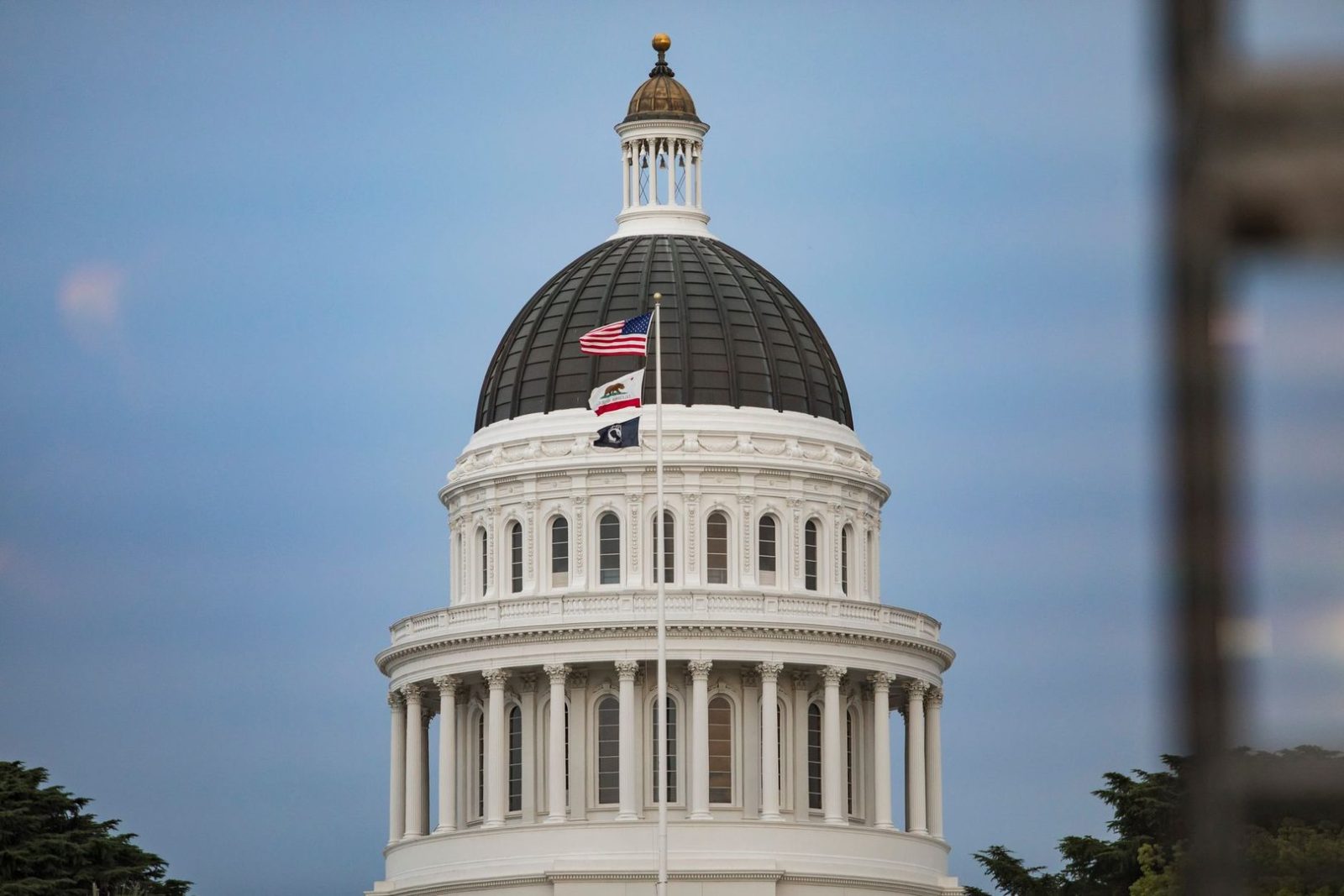

The legislative proposal sounds almost comically overdue. A bipartisan effort in Congress would finally ban federal employees, members of Congress, and their immediate families from trading stocks, commodities, or securities based on material nonpublic information obtained through their government positions. The bill would also prohibit these insiders from placing bets on prediction markets tied to actions they could directly influence.
And yet here we are, in 2024, still debating whether the people who write the rules should be allowed to profit from knowing what’s in those rules before anyone else does.
The Obvious Problem That Took Decades to Address
The proposal targets what anyone with a functioning moral compass would recognize as a fundamental conflict of interest. A senator sits on the Armed Services Committee, learns that a major defense contract is about to be awarded to a specific company, and her husband buys call options on that company’s stock. A Treasury official working on tariff policy takes a position in currency markets. A congressional staffer with advance knowledge of agricultural legislation trades commodity futures.
All of this happens. Has happened. Keeps happening. The academic research documenting abnormal returns among congressional stock portfolios is extensive enough to fill a semester-long course. Studies have shown that senators’ personal stock trades outperform the market by meaningful margins — the kind of margins that would make any hedge fund manager’s bonus committee very happy.
The legal framework has always been murky. The STOCK Act of 2012 was supposed to fix this, requiring members of Congress to disclose trades and theoretically subjecting them to insider trading laws. But enforcement has been a joke. Fines are minimal. Prosecutions are rare. And the definition of “material nonpublic information” in the congressional context remains fuzzy enough to drive a lobbying fleet through.
What’s different about the current proposal is its explicit extension to prediction markets — a category of financial instrument that barely existed in mainstream American finance a decade ago but now represents a billion-dollar industry that Washington can no longer ignore.
The Prediction Market Angle Nobody’s Talking About
Here’s where it gets interesting for anyone watching this space closely. The legislative language specifically addresses event contracts — the binary yes-or-no bets that platforms like Kalshi and Polymarket have popularized. The concern isn’t hypothetical.
Imagine a senator who knows that a particular bill will pass next Tuesday because she counted the votes in a closed-door meeting that morning. She could, at least in theory, place a bet on that outcome through a prediction market. The profit potential is immediate, the information asymmetry is total, and until now, the legal prohibition has been ambiguous at best.
This gets even more complicated when you consider the ongoing regulatory battles over what kinds of event contracts should be legal in the first place. The CFTC has spent years trying to define where prediction markets end and gambling begins. Now Congress is essentially acknowledging that these markets have become significant enough to require explicit insider trading rules.
The industry implications cut both ways. On one hand, a clear legal framework that treats government officials betting on their own decisions as obviously illegal could actually strengthen the legitimacy of prediction markets. It signals that these are serious financial instruments worthy of serious regulation — not carnival games that Washington can dismiss as noise.

On the other hand, any legislation that draws attention to prediction markets risks inviting additional scrutiny. The platforms have grown accustomed to operating in regulatory gray zones. Being explicitly mentioned in an insider trading statute puts them on the congressional radar in ways that their compliance teams might prefer to avoid.
The Enforcement Question That Will Define Success or Failure
Proposals like this live or die on enforcement. The STOCK Act proved that you can pass a law requiring disclosure without actually changing behavior if nobody bothers to check the filings or prosecute violations.
The current proposal reportedly includes enhanced penalties and more aggressive disclosure requirements. But the fundamental problem remains: proving insider trading requires demonstrating that someone acted on specific nonpublic information. In traditional securities enforcement, that often means email trails, recorded phone calls, suspicious timing patterns that investigators can piece together into a narrative.
In prediction markets, the challenge is even steeper. Trading is often pseudonymous. Platforms operate across jurisdictions. And the line between “I have inside information” and “I have a sophisticated political analysis” can be genuinely difficult to draw.
Consider a staffer who has spent years watching her boss negotiate legislation. She understands the procedural rhythms, the personalities, the likely outcomes of particular parliamentary maneuvers. Is her prediction market bet based on material nonpublic information, or just expertise? The legal distinction matters enormously, and it’s not obvious that the current proposal provides clear guidance.
Congressional attention to this space has been building for months, but the enforcement infrastructure hasn’t kept pace. You can write all the laws you want. If the agencies responsible for enforcement lack the technical capacity to monitor prediction market trading, the statute becomes decorative.
What the Industry Should Actually Be Worried About
The prediction market industry has spent the past year aggressively lobbying Washington on everything from sports betting to election contracts. This proposal represents a different kind of threat — not a ban on particular market types, but a structural constraint on who can participate.
If government insiders are prohibited from trading, that removes one source of liquidity and information from the market. Some would argue that’s a feature, not a bug. Prediction markets are supposed to aggregate dispersed information from many participants, not allow a handful of insiders to extract profits by front-running everyone else.
But the practical effect depends on how broadly the prohibition extends. Does it cover only members of Congress and their families? What about the estimated 30,000 congressional staffers, many of whom have intimate knowledge of legislative proceedings? What about the executive branch — the analysts at Treasury, the lawyers at DOJ, the scientists at FDA who know which drug approvals are coming before anyone else?
The scope question matters enormously for market efficiency. If the prohibition is narrow, it barely affects trading volumes. If it’s broad, it could meaningfully reduce the information advantage that makes political prediction markets valuable in the first place.
The Broader Ethics Reckoning
Strip away the prediction market specifics and this proposal reflects something deeper: a growing recognition that the people who govern are playing a different game than the people who are governed. The asymmetric access to information that government service provides has always existed. What’s changed is the speed and ease with which that information can be monetized.
Twenty years ago, a senator who wanted to profit from advance knowledge of legislation had to work through intermediaries, create distance, maintain plausible deniability. Today, she can open an app on her phone and place a bet that settles in cash within hours of a vote. The friction that once constrained corruption has largely disappeared.
Prediction markets didn’t create this problem. But they’ve made it more visible. When Polymarket odds move before a policy announcement, people notice. When trading patterns suggest someone knew something they shouldn’t have, the blockchain provides a record that’s harder to hide than a brokerage account in a spouse’s name.
The industry has faced scrutiny from regulators and lawmakers alike, often for reasons that have nothing to do with insider trading. But this particular legislative effort could end up clarifying rather than constraining the market’s future. If Congress explicitly acknowledges that betting on policy outcomes is a legitimate financial activity — one important enough to require insider trading rules — that’s a form of validation that the industry has been seeking for years.
The path forward depends on details that aren’t yet public. How the prohibition is drafted, who it covers, what enforcement mechanisms are created, and whether the final legislation survives the gauntlet of congressional procedure all remain uncertain. What’s clear is that prediction markets have become mainstream enough that Congress feels compelled to address them directly.
That’s either very good news or very bad news, depending on how you read the political winds. For an industry built on assessing probabilities, the uncertainty is almost poetic.