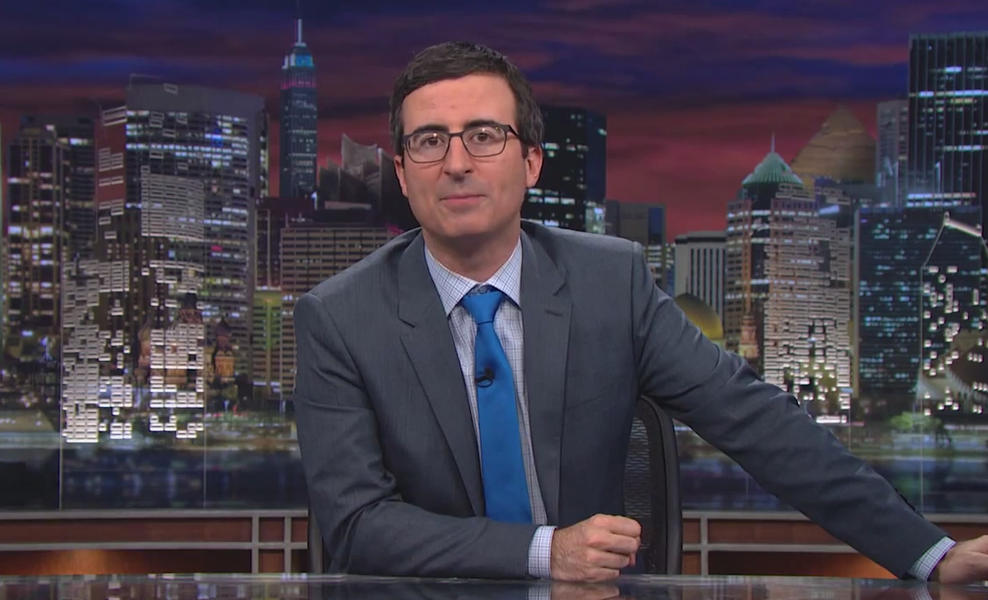

John Oliver took aim at prediction markets on Last Week Tonight recently, and the segment landed exactly the way you’d expect from a show that excels at making complicated things entertaining while occasionally missing what makes them actually interesting. The host brought his signature blend of righteous indignation and carefully researched zingers to a topic that — for those of us who’ve watched this space evolve from academic curiosity to billion-dollar industry — deserves a more nuanced treatment than late-night comedy typically allows.
But here’s the thing about Oliver’s segments: they often get more right than his critics want to admit, and more wrong than his fans would like to believe. Prediction markets are having a genuine moment, and that moment deserves scrutiny from every angle, including the comedic one. The question is whether the scrutiny actually illuminates or just entertains.
The Comedy Writer’s Version of Complexity
Oliver’s approach to prediction markets followed his established template. Take a niche topic most viewers haven’t thought about. Find the most absurd examples. Connect them to broader concerns about deregulation, financial speculation, or democratic integrity. Land a joke about the whole enterprise being ridiculous. Roll credits.
The formula works for television. It works considerably less well for understanding how prediction markets actually function and why serious people — including economists, political scientists, and yes, some traders who’ve made real money in real markets — think they serve a legitimate purpose.
What Oliver highlighted, correctly, is that prediction markets have expanded far beyond their original academic premise. Platforms like Polymarket’s latest markets now offer contracts on everything from celebrity divorces to natural disasters. The scope has grown almost absurdly broad. And when you’re betting on whether a public figure will face criminal charges by a certain date, the line between information aggregation and tasteless speculation becomes genuinely blurry.
That’s a fair critique. But it’s also an incomplete one.
Where the Segment Actually Hit the Mark
Credit where earned: Oliver correctly identified that prediction markets exist in a regulatory gray zone that benefits certain operators more than others. The CFTC has spent years trying to figure out what these platforms actually are — gambling sites, commodity markets, research instruments, or something else entirely. That uncertainty isn’t just academic. It shapes who can participate, how much they can wager, and whether the prices generated by these markets mean anything reliable.
He also touched on something that bothers serious market observers: the potential for manipulation. When thin liquidity meets high-profile political contracts, someone with enough capital can move prices in ways that generate headlines. The headlines then shape perception. The perception potentially influences behavior. It’s not quite a feedback loop you can exploit endlessly, but it’s enough to raise legitimate questions about what these prices actually tell us.
And the show’s skepticism about treating prediction market prices as objective truth? Entirely warranted. I’ve watched prediction markets call elections wrong, price impossibilities like they were plausible, and swing wildly on nothing more than a rumor. The idea that these prices represent some pure distillation of collective wisdom ignores how markets actually behave under uncertainty. They’re not oracles. They’re mechanisms — sometimes useful, sometimes captured by the same biases and information failures that plague every other forecasting method.
What Got Lost in the Punchlines
Here’s where Oliver’s treatment fell short. Prediction markets emerged from a genuine insight: that aggregating dispersed information through a price mechanism can outperform expert forecasts. This isn’t wishful thinking. The research backing the concept goes back decades, including work from economists who’ve spent careers studying how markets process information.
The problem is that insight gets buried when you focus exclusively on the weirdest contracts and the most concerning edge cases. Yes, someone can bet on whether a volcano will erupt. Yes, that sounds absurd when delivered with comedic timing. But the existence of weird markets doesn’t invalidate the entire enterprise any more than the existence of meme stocks invalidates equity investing.
Kalshi’s regulatory fight represents exactly the kind of institutional legitimization that Oliver’s segment largely ignored. The platform has fought through CFTC approval processes, faced down legal challenges, and emerged with something that resembles genuine regulatory blessing for certain contract types. That’s not nothing. That’s the system actually functioning — slowly, messily, but functioning.
What prediction markets offer, at their best, is a forcing function for intellectual honesty. You can tell everyone the election is certain to go one way. But if you won’t put money on it at the prevailing odds? That gap reveals something. The market price represents what people actually believe when they have skin in the game, which is frequently different from what they claim to believe in conversation.
The Legitimacy Question Nobody Wants to Answer
The deeper issue Oliver circled without quite landing on: prediction markets have a legitimacy problem that regulation alone won’t solve. When platforms list contracts on judicial decisions, they’re implicitly claiming to measure something that most people feel shouldn’t be measured that way. When they price outcomes in ongoing criminal cases, they transform civic processes into spectator sports with point spreads.
This discomfort is real and warranted. But discomfort isn’t the same as an argument. The same people who find it distasteful to trade contracts on trial outcomes usually have no problem with journalists speculating about the same outcomes in print, or pundits confidently predicting them on cable news. The difference is that the market generates a number — a specific probability — and that specificity feels like it crosses some line.
Maybe it does. But maybe the line we’ve drawn is arbitrary, protecting a kind of democratic mysticism that doesn’t survive contact with how decisions actually get made. The truth is that powerful people already trade on political information constantly, just through different instruments. Prediction markets make the speculation visible and democratic. Whether that’s better or worse depends entirely on what you think you’re protecting.
What Comes Next
Prediction markets aren’t going away. The genie escaped years ago, and the regulatory frameworks are still catching up to platforms that operate across borders, accept cryptocurrency, and serve users who have no relationship with traditional financial institutions. Oliver’s segment won’t change that trajectory — nor should a comedy show be expected to.
But for viewers who only know prediction markets through the Last Week Tonight lens, the picture is incomplete. These markets represent a genuine experiment in information aggregation. Sometimes they fail spectacularly. Sometimes they outperform every other forecasting method available. Most of the time, they land somewhere in between, offering signals that sophisticated observers can interpret and simpler observers can misread.
The industry needs scrutiny. It needs skepticism. What it doesn’t need is dismissal dressed up as analysis. And while Oliver is too smart a commentator to dismiss things entirely, the format pushes toward ridicule over understanding.
Prediction markets work best when people understand their limitations. They’re not truth machines. They’re not democratic bypasses. They’re tools — powerful ones, flawed ones, tools that reflect the same human biases that shape every other institution. Getting that nuance into a twenty-minute comedy segment was probably never realistic. But for those willing to look deeper, the reality is considerably more interesting than the jokes suggest.