
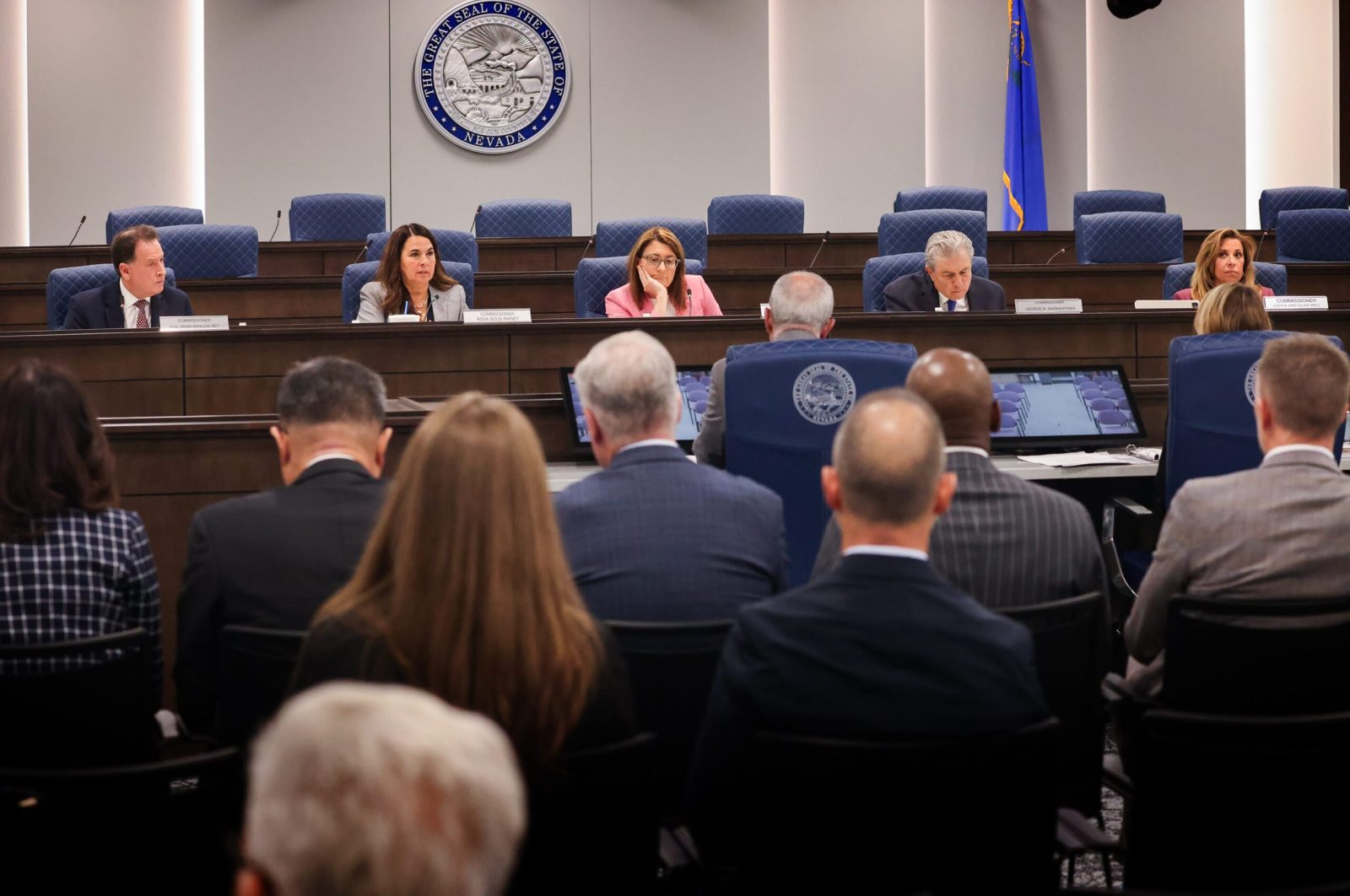
The Nevada gaming establishment has spent decades perfecting the art of regulatory capture. Casinos don’t just operate in the state — they essentially wrote the rulebook governing who gets to take bets and who doesn’t. So when prediction markets started gaining mainstream traction, it was only a matter of time before someone in Carson City noticed these upstarts weren’t paying tribute.
The Quiet War Nobody’s Watching
What’s happening in Nevada right now deserves more attention than it’s getting. The state’s gaming regulators appear to be laying groundwork for a legal challenge that could fundamentally reshape how prediction markets operate in America. The details remain murky — regulators rarely telegraph their moves — but the trajectory is unmistakable.
Nevada has always viewed itself as the gatekeeper of American wagering. When offshore sportsbooks proliferated, Nevada pushed for federal crackdowns. When daily fantasy sports exploded, Nevada was among the first states to demand licensing. The pattern holds: if money changes hands based on uncertain outcomes, Nevada wants jurisdiction. Or at least a cut.
Prediction markets present a peculiar problem for this framework. Platforms like Kalshi’s regulatory fight have spent years arguing — successfully, in some federal venues — that contracts on election outcomes or economic indicators aren’t gambling at all. They’re financial instruments. Derivatives, essentially. The distinction matters enormously because financial instruments fall under CFTC jurisdiction, not state gaming commissions.
Nevada’s gaming establishment finds this argument somewhere between laughable and insulting.
The Classification Game
Here’s the thing about regulatory classification: it’s rarely about what something actually is. It’s about what an agency can plausibly claim it is, given sufficient motivation. A contract that pays out if unemployment hits 4.5% next quarter looks an awful lot like a binary option to a securities lawyer. It looks an awful lot like a prop bet to a gaming regulator. Both are technically correct. Neither is definitively right.
The federal courts sided with the CFTC’s interpretation when Kalshi won its landmark case allowing election markets. But federal rulings don’t automatically preempt state authority — especially in a state where gaming regulation has constitutional status. Nevada could theoretically require prediction market platforms to obtain gaming licenses, subjecting them to the same oversight, taxation, and operational restrictions that apply to every slot machine and craps table on the Strip.
Would such a move survive legal challenge? Uncertain. The commerce clause implications alone could keep appellate courts busy for years. But uncertainty cuts both ways. Platforms operating on thin margins can’t afford years of litigation while their business model hangs in limbo.
What the Money Knows
The smart money in this industry has been watching state-level movements with growing unease. Prediction markets had a banner 2024 — Polymarket’s latest markets drew unprecedented volume during the election cycle, and mainstream financial media started treating market-implied probabilities as legitimate data points rather than gambling curiosities. Success breeds regulatory interest the way blood attracts sharks.
Nevada isn’t alone in reconsidering its posture. Several states have begun examining whether prediction markets should fall under existing gaming frameworks or require entirely new regulatory architecture. The difference is that Nevada has infrastructure, expertise, and — crucially — economic incentive to make an aggressive case. Every dollar wagered on Polymarket or Kalshi is a dollar not flowing through Nevada-regulated channels.
There’s also a philosophical dimension that gets lost in the legal maneuvering. Prediction markets genuinely do serve different purposes than traditional gambling. They aggregate information. They create accountability mechanisms. When a political figure’s approval rating shifts, prediction market prices often move before polls catch up — not because traders have inside information, but because markets process distributed knowledge more efficiently than surveys. That informational function has value independent of any wagering activity.
But try explaining information aggregation theory to a state gaming commission whose budget depends on licensing fees.
The Precedent Problem
What happens in Nevada rarely stays in Nevada — at least when it comes to gaming regulation. The state’s frameworks have historically served as templates for other jurisdictions. If Nevada successfully establishes that prediction markets require gaming licenses, expect a cascade of similar requirements across multiple states. Each new licensing requirement adds compliance costs. Each new jurisdiction adds legal exposure.
The prediction market industry’s current growth trajectory assumes a relatively permissive regulatory environment. That assumption may prove dangerously optimistic. We’ve seen this pattern before in adjacent industries. Daily fantasy sports went from unregulated wild west to state-by-state licensing nightmare in roughly 18 months once regulators decided to pay attention.
For individual traders, the implications depend entirely on where this ultimately lands. More regulation typically means less liquidity, wider spreads, and restricted market access — the kinds of friction that erode the informational advantages prediction markets theoretically provide. A heavily regulated prediction market looks a lot like a regular derivatives exchange, which raises the question of why anyone would use it instead of established financial instruments.
The next several months will likely determine whether prediction markets remain a distinct asset class or get absorbed into existing regulatory frameworks designed for fundamentally different purposes. Nevada’s move — whatever specific form it takes — represents the opening shot in that battle. And if history offers any guide, the house usually wins.